

Buying new construction in the Charleston suburbs usually means choosing a builder and floor plan inside a master-planned community like Nexton, Cane Bay, or Carnes Crossroads, then waiting through a build that commonly runs several months. You can bring your own agent (at no added cost in most cases), the price and upgrades are negotiable more often than people think, and a VA loan works on a finished new build. Here is how the process actually runs, start to finish.
New construction is one of the biggest housing stories in the suburbs north and west of Charleston, and it is also the part of the market where buyers most often walk in without anyone on their side of the table. This guide is the honest version: the builder process, why representation matters, how the timeline interacts with a move (including a PCS report date), how VA financing fits, and the tradeoffs nobody at a sales center is paid to tell you. Where a number depends on live market data or an official rate, it is sourced and dated, or flagged for you to confirm.
A quick orientation before you read. Three of the suburbs’ largest new-build communities anchor this guide:
- Nexton (Summerville, Berkeley County) is a master-planned community with several villages, a walkable retail district at Nexton Square, and a mix of active builders across price tiers.
- Cane Bay (addressed across Summerville, Moncks Corner, and Goose Creek, Berkeley County) is a large plantation-style master plan built around a lake system, with multiple builder sub-communities.
- Carnes Crossroads (Goose Creek and Summerville modifiers both apply, Berkeley County) is an agrihood developed by Freehold Communities, with amenities including The Perch, the Lakehouse, and the Farm.
You will also see references to the other two site pillars: the PCS to Joint Base Charleston relocation guide for military moves, and the VA loan FAQ for Charleston military buyers for financing mechanics. New construction sits right in the middle of both.
Do you need a realtor for new construction in the Charleston suburbs?
You do not have to bring your own agent, but it is usually to your advantage, because the on-site sales agent at the model home represents the builder, not you, and in most cases the builder pays the buyer-agent commission out of its own marketing budget rather than adding it to your price. Walk into a sales center alone and you are negotiating your largest purchase against a professional whose job is to protect the builder’s margin. Your own representation puts someone on your side for the parts that actually move money: upgrade pricing, lot premiums, incentive stacking, timeline protections, and an independent read on resale.
There is one timing rule that matters more than any other, and it trips buyers up constantly: your agent generally needs to register with you on your first visit to the sales center. Many builders will not honor buyer representation if you toured and registered on your own first, then tried to add an agent later. If you are even considering having someone represent you, bring them (or have them register you) before you sign in at the model home. This is the most common, and most avoidable, way buyers lose their representation.
For the full walkthrough of representation and who pays, see do you need a realtor for new construction. If you are financing with a VA loan, the commission question has its own nuances, covered at who pays the buyer agent under a VA loan. Before that first visit, it is worth having the questions to ask a new-construction builder in hand, representation among them, because the sales center is where you will be asked to sign in.
Telling the builder you have an agent
Say so up front, ideally on the first visit, because that is how the builder’s process is set up to recognize and pay your representation. Builders expect buyer agents and have a registration step for exactly this reason. Being straightforward on visit one protects you; being coy about it can cost you representation later. The registration mechanics, and what to do if you already toured alone, are covered in do you need a realtor for new construction.
Builder preferred-lender incentives, in brief
Builders frequently offer design-center credits, closing-cost help, or rate buydowns when you use their affiliated (in-house) lender, and those incentives can be genuinely valuable, but they are not free, so weigh them against a competing quote rather than accepting them on faith. The honest caveat is that the loan’s rate and fees still need to compete on their own. Get at least one outside pre-approval, put the offers side by side, and treat the incentive as one line in the comparison, not the whole decision. If you are a VA buyer, confirm the in-house lender is fluent in VA loans specifically; not all are.
How long does it take to build a new home in the Charleston suburbs?
Plan on a multi-month build, commonly in the range of several months from contract to keys for a to-be-built home, with a move-in-ready (“spec” or inventory) home closing much faster once it is complete. The exact timeline depends on whether you are buying dirt (a homesite with a plan you customize), an in-progress home, or a finished inventory home, plus weather, permitting, and the builder’s current backlog. Charleston’s summer storm season and the region’s permitting pace can both add time, so build in a buffer.
Here is how the three purchase types compare on timeline and control:
| Purchase type | What it is | Typical timeline to close | Your control over selections | Best when |
|---|---|---|---|---|
| To-be-built (dirt start) | You pick the homesite, floor plan, and finishes; the build starts after contract | Longest (several months) | Highest: floor plan, lot, structural options, design center | You have lead time and want to personalize |
| In-progress / mid-build | Home is under construction; some selections already locked | Medium | Partial: cosmetic finishes may remain, structure is set | You want some choice but a shorter wait |
| Inventory / move-in ready | Completed (or nearly) spec home | Shortest (weeks to a couple of months) | Lowest: you take it largely as built | You are on a tight report date or timeline |
Timelines are general planning ranges, not builder commitments. Confirm the specific build schedule, in writing, with your builder and get contract language that addresses delays.
What if the build runs late and I have a move-in or report date?
Build a buffer and get delay protections in the contract, because construction dates slip for reasons outside your control, and a slipped date is a real risk if you are timing a move or a military report date. Before you sign, ask how the builder handles delays, whether there is any remedy if the completion date moves, and how your rate lock interacts with a longer timeline (extended locks and float-downs exist, but they have costs and rules). If your move is tied to PCS orders, an inventory or in-progress home lowers the timeline risk versus a dirt start. Coordinating a build schedule against a report date is exactly the kind of planning covered in the PCS to Joint Base Charleston relocation guide.
A Charleston-suburb new-construction timeline (planning view)
This is a general planning sequence for a to-be-built home, useful whether you are moving across town or across the country. Adjust to your builder’s actual schedule.
- Before contract: tour communities, register your agent on the first visit, compare builders and homesites, get pre-approved (including at least one non-builder lender).
- Contract to design center: sign the purchase agreement, make your earnest money deposit, then complete design-center selections (this is where upgrade costs add up fast).
- Permitting and build: the builder pulls permits and begins construction; expect periodic milestone updates and, ideally, a pre-drywall walkthrough.
- Pre-closing: final walkthrough and punch list (the written list of items the builder agrees to fix before or shortly after closing), lender clear-to-close, and for VA loans, the VA appraisal must be complete.
- Closing and warranty: you close (South Carolina uses an attorney at closing), take possession, and enter the builder’s warranty period. Many buyers do an 11-month warranty inspection near the end of the first-year warranty.
Can you negotiate the price on a new construction home?
You can usually negotiate more than the base sticker suggests, though builders protect the published base price to defend the comps for the whole community, so the real negotiation is often in incentives, upgrades, lot premiums, and closing-cost help rather than a straight price cut. A builder who drops the base price on your home effectively lowers the recorded sale price that every future appraisal in that community leans on, which is why they would rather hand you design-center dollars, a rate buydown, or covered closing costs. Knowing where the give actually is, and how to stack it, is a large part of what representation buys you. The incentive and upgrade questions worth asking out loud in the sales office are in the builder question checklist.
Common negotiation levers on Charleston-suburb new builds include:
- Design-center or upgrade credits (a set dollar amount toward finishes).
- Rate buydowns or closing-cost assistance, frequently tied to the builder’s affiliated lender.
- Lot premium flexibility on less popular homesites.
- Included upgrades (appliances, blinds, fencing) rather than a price reduction.
- End-of-quarter or end-of-phase timing, when a builder may be motivated to close out inventory.
For the detailed playbook, see negotiating new construction (coming soon).
Is the lot premium included in the base price?
Usually not, and it is one of the most common surprises: the advertised “from” price is typically for a base plan on a standard homesite, and premium lots (larger, on a pond, on a corner, backing to a tree line) carry an added lot premium on top. When you compare a builder’s “starting at” number to a similar home elsewhere, confirm what lot the base price assumes. Ask which homesites carry premiums, how much, and what is planned for the land behind and beside the lot you like, so you are not surprised later by a road or a future commercial phase.
Which upgrades are worth it?
Prioritize structural and hard-to-change items over cosmetic ones, because you can repaint a wall or swap a light fixture later, but you cannot easily add square footage, move a wall, or change a lot after closing. Structural options (an extended floor plan, an added room, a sunroom, rough-ins) and the homesite itself are the choices you effectively lock in for the life of the home, so that is where thoughtful spending tends to hold value. Highly personal cosmetic finishes are the easiest to overspend on and the least likely to return dollar-for-dollar at resale. An agent who knows the community can give you an independent read on which upgrades buyers there actually value.
Can you use a VA loan for new construction in South Carolina?
Yes, a VA loan works to buy a finished new-construction home as a standard VA purchase loan, and as of a 2025 VA change, the builder no longer needs a VA Builder ID for a standard new-construction purchase. The home still has to pass the VA appraisal and meet the VA’s Minimum Property Requirements, and the loan generally cannot fund until the home is complete, so the closing lines up with the certificate of occupancy rather than mid-build. VA loans that finance a build from scratch (true construction loans) exist but are scarce; most VA buyers purchase a completed or near-complete home.
A few specifics that matter for new construction on a VA loan:
- Builder ID no longer required for standard new construction. The VA rescinded the Builder ID / BIN requirement per VA Circular 26-25-01, dated March 31, 2025 (source: benefits.va.gov, as of 2026-07-01). The requirement is unchanged for Specially Adapted Housing (SAH) grants and Native American Direct Loans (NADL), and builders must still meet state and local licensing. Many pages online still cite the old rule.
- VA funding fee. For most first-use VA buyers putting $0 down, the VA funding fee is 2.15% of the loan amount (source: VA.gov funding-fee page, effective 2023-04-07, current as of 2026-07-01). Subsequent use at less than 5% down is 3.3%. The fee is a one-time charge that can be financed into the loan, and some veterans (for example, those receiving VA compensation for a service-connected disability) are exempt. Confirm your figure with your lender and the VA.
- Occupancy clock. The VA generally expects you to occupy the home as your primary residence within a reasonable time, commonly interpreted as 60 days after closing, with exceptions for deployment (a spouse’s occupancy can satisfy it) and delayed occupancy up to about 12 months in unusual circumstances with a certified date. For new construction, the practical start of that clock is completion. See VA loan occupancy when PCSing (coming soon).
For the full new-construction financing picture, see VA loan on new construction in SC, and for the fee itself, VA funding fee. This is general information, not lending or legal advice; confirm the specifics with your VA-savvy lender and the VA.
Does the seller (or builder) paying my agent affect my VA offer?
When a seller or builder pays your buyer-agent fee, it is treated as a normal cost of sale and does not count against the VA’s 4% seller-concession cap, which is one reason VA offers can compete better than buyers expect. The VA caps concessions at 4% of the property’s reasonable value (the VA Notice of Value), and that bucket covers things like a seller-paid funding fee or prepaids, not the buyer-agent commission or the buyer’s normal closing costs (source: VA Lenders Handbook, Pamphlet 26-7, current as of 2026-07-01). Separately, VA guidance since August 2024 allows a veteran to pay their own buyer-broker fee where needed, in cash at closing rather than financed into the loan, under a temporary local variance (VA Circular 26-24-14, with Change 1 dated 2024-08-05, “valid until rescinded,” source: benefits.va.gov). That variance is temporary, not permanent law; treat any claim that it was “made permanent” with skepticism. Details at who pays the buyer agent under a VA loan.
New construction vs resale in the Charleston suburbs: the honest tradeoffs
New construction gets you current finishes, builder warranties, and energy efficiency with fewer immediate repairs, while resale often gets you established landscaping, a shorter timeline, more mature amenities, and sometimes more house per dollar; neither is simply better, and the right answer depends on your timeline, budget, and appetite for decisions. The sales-center pitch will lean hard on the upsides of new. Here is the balanced version.
| Factor | New construction | Resale |
|---|---|---|
| Timeline to move in | Longer for to-be-built; fast for inventory | Usually faster (weeks after under contract) |
| Condition and warranty | New systems, builder warranty, fewer near-term repairs | Older systems; inspect carefully; no builder warranty |
| Finishes and layout | Current designs; you may customize | As-is unless you renovate |
| Price and cost control | Base price plus upgrades and lot premiums add up | Negotiated on the whole package; fewer add-ons |
| Amenities and landscaping | Community amenities may still be under construction; young trees | Established trees, mature amenities in older sections |
| Negotiation | Mostly incentives and upgrades, not base price | Price, repairs, and terms more directly negotiable |
| Resale considerations | You may sell into an active builder phase competing with new inventory | Established resale market in the neighborhood |
This comparison is general. In a specific community, current builder incentives, phase status, and available resale inventory can shift the math. For a market-by-market read, see new construction vs resale.
One honest, locally specific tradeoff worth naming: in a community that is still actively building, you may later be selling your home at the same time the builder is selling brand-new ones a few streets over. That is not a reason to avoid new construction, but it is a reason to weigh homesite, floor plan, and upgrade choices with resale in mind from day one, especially if you expect to move again in a few years (a common situation for military buyers on a typical tour length).
Do you need a home inspection on new construction?
Yes, an independent home inspection is worth it even on a brand-new home, because “new” does not mean “flawless,” and the inspector works for you rather than the builder. Many buyers do two: a pre-drywall inspection (while framing, wiring, and plumbing are still visible) and a final inspection before closing that feeds the punch list. A lot of buyers also schedule an 11-month warranty inspection near the end of the first-year builder warranty, so anything that has surfaced gets documented and submitted while it is still covered. You can absolutely hire your own inspector; you do not have to rely solely on the builder’s quality checks or the municipal inspection.
For VA buyers, note the distinction: the VA appraisal is required (it confirms value and checks Minimum Property Requirements), while a home inspection is optional but strongly recommended. They are not the same thing, and the appraisal is not a substitute for an inspection. More at VA appraisal vs inspection.
New construction by community: Nexton, Cane Bay, and Carnes Crossroads
Each of the big master-planned communities in the suburbs has its own builder roster, amenity set, school attendance zones, and HOA/POA structure, so “new construction near Charleston” really means choosing among distinct communities with different tradeoffs on commute, price tier, and lot type. Below is an objective, fact-based orientation to the three this guide centers on. Builder rosters and community details change with each phase, so confirm the current lineup with the community and your agent before you rely on it.
| Community | County / addressing | Master developer or profile | Notable amenities (objective) | Explore |
|---|---|---|---|---|
| Nexton | Berkeley County (Summerville addressing) | Master-planned, multiple villages | Nexton Square retail district, trail network, community pools | Living in Nexton |
| Cane Bay | Berkeley County (Summerville / Moncks Corner / Goose Creek addressing) | Large plantation-style master plan | Lake system with water access, YMCA, community pools | Living in Cane Bay |
| Carnes Crossroads | Berkeley County (Goose Creek / Summerville modifiers) | Agrihood by Freehold Communities | The Perch (pool and waterslide), the Lakehouse, the Farm | Living in Carnes Crossroads |
School attendance zones for each community and homesite should be confirmed against the current Berkeley County School District locator, because zones can change and vary by address within a single community. Ask for the specific assigned schools for the exact homesite, as a fact, before you decide.
For the transactional, current-inventory view of each community (live listings as the IDX feed comes online), the site’s per-community pages are /new-construction/nexton/, /new-construction/cane-bay/, and /new-construction/carnes-crossroads/. For how each community’s market is moving, the market reports live at Nexton market updates, Cane Bay market updates, and Carnes Crossroads market updates.
What do new-construction homes cost in these communities?
Entry-level and typical new-construction single-family pricing in the more affordable suburbs (including parts of Summerville, Goose Creek, and Moncks Corner) has commonly run in roughly the $340,000 to $380,000 band, with a true floor in the low $300s for smaller product and townhomes, while larger plans and premium communities run higher (source: builder list pricing and Zillow ZHVI market data, mid-2026; this is a general band, not a live quote, and not financial advice; confirm current pricing with a lender and the latest Charleston Trident Association of Realtors monthly report). The tri-county metro median sits well above this entry-level band, so do not confuse a community’s “from” pricing with the area median. For a current, dated figure on any specific community, pull the latest CTAR (Charleston Trident Association of Realtors) monthly report. Builder “from” prices also move with incentives, so always confirm today’s number with the community.
Frequently asked questions
Do you need a realtor for new construction in the Charleston suburbs?
You are not required to, but it usually helps, because the on-site agent represents the builder and, in most cases, the builder pays your agent’s commission. Just make sure your agent registers with you on your first visit to the sales center.
How long does it take to build a new home in the Charleston suburbs?
A to-be-built home commonly takes several months from contract to keys; a completed inventory home can close in weeks. Weather, permitting, and builder backlog affect the schedule, so build in a buffer.
Can you negotiate the price on a new construction home?
Often more than the base sticker suggests, though builders protect the published base price. The real negotiation is usually in incentives, upgrades, lot premiums, and closing-cost help.
Is the lot premium included in the base price?
Usually not. The advertised “from” price typically assumes a base plan on a standard homesite; premium lots add a separate lot premium on top.
Can you use a VA loan for new construction in South Carolina?
Yes, to buy a finished new build as a standard VA purchase loan. As of VA Circular 26-25-01 (March 31, 2025), a VA Builder ID is no longer required for standard new construction; the home still must pass the VA appraisal.
Do you need a home inspection on new construction?
Yes, an independent inspection is recommended even on a new home, and many buyers add a pre-drywall inspection and an 11-month warranty inspection. For VA buyers, the appraisal is required but an inspection is optional and separate.
Is new construction better than resale in the Charleston suburbs?
Neither is simply better. New gets you current finishes and warranties; resale often gets you a faster timeline, mature landscaping, and sometimes more house per dollar. It depends on your timeline, budget, and how much decision-making you want.
About the author
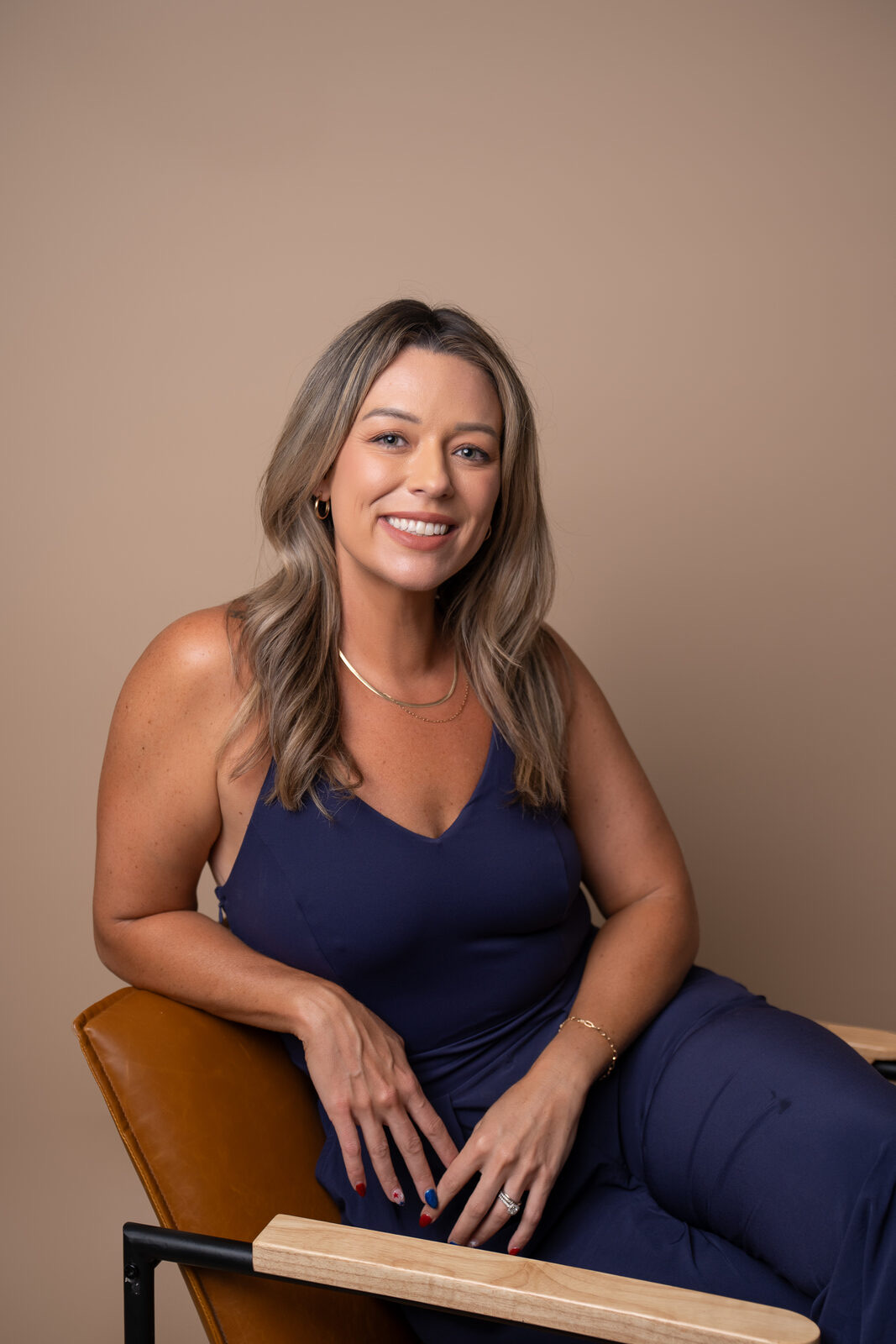
Megan Duncan is a Lowcountry real estate agent with Modern + Main Realty who specializes in military and PCS relocations to the Joint Base Charleston area and in new construction. An out-of-state transplant herself, she has helped buyers and sellers across Summerville, Nexton, Cane Bay, Moncks Corner, Goose Creek, and Carnes Crossroads. She holds the Military Relocation Professional (MRP) designation and is fluent in BAH, VA loans, and the timelines that come with orders. SC License #141795.
Her approach is straightforward: clear answers, honest guidance on neighborhoods and numbers, and steady communication whether you are down the road or still stationed across the country.
One clear next step: if you are weighing a new build in Nexton, Cane Bay, or Carnes Crossroads and want an honest read on builders, timelines, and the tradeoffs, talk to Megan. No pressure, and best to reach out before your first sales-center visit so your representation is set up correctly.